


Electric Vehicle Charging Units
Product Instruction EV charger station An electric vehicle charging station is designed to serve as an equivalent of a fuel dispenser in a gas station. Typically, the charging unit can be installed on the ground or wall and will be located in a variety of locations, such as public buildings,...
Description
Product Instruction
EV charger stationAn electric vehicle charging station is designed to serve as an equivalent of a fuel dispenser in a gas station. Typically, the charging unit can be installed on the ground or wall and will be located in a variety of locations, such as public buildings, shopping malls, public parking lots, and residential parking facilities. The charging stations provide a vital service for people driving electric cars, ensuring that they can top up their batteries while on the go. With the growing popularity of electric cars, these charging stations are becoming increasingly common and are helping to pave the way towards a greener and more sustainable future.
The charging pile is designed to accommodate different models of electric vehicles with varying voltage levels. It is directly connected to the AC grid on the input end and features a charging plug on the output end for conveniently charging the electric vehicle. By rearranging the information provided in the original text, I have generated a highly similar content that remains true to the original information.
To facilitate the charging process of battery electric vehicles (BEVs) and plug-in hybrid electric vehicles (PHEVs), electric vehicle charging units have been invented. These units employ electronic devices to quickly and efficiently charge electric vehicles, making it convenient for users to recharge their vehicles at various locations, including residential and commercial areas, parking lots, and on-street parking spaces. Without these charging units, electric vehicle users would have to depend on traditional gasoline-powered vehicles, which are not only cost-intensive but also environmentally hazardous. Therefore, electric vehicle charging units are essential in ensuring that electric vehicles remain a viable alternative to traditional vehicles.

Product Parameters
NO | Parameters | Electric Vehicle Charging Units | |||
General Requirements | |||||
1 | EV Charger Type | AC | |||
2 | Charger Capacity | 7KW | 11KW | 22KW | |
3 | Product Model NO. | ENC-ACL007A | ENC-ACL011A | ENC-ACL022A/B | |
4 | Mounting | Ground-Mounted | |||
Input Requirements | |||||
5 | AC Supply System | Single-Phase, 3 Wire AC system | Single-Phase, 3 Wire AC system(ANSI) | ||
6 | Nominal Input Voltage | AC220V±15%(ENC) | AC380V±15%(ENC) | AC380V±15%(ENC) | |
7 | Input Frequency | 50±3Hz | |||
Environmental Requirements | |||||
8 | Ambient Temperature | -25 to 55°C | |||
9 | Ambient Humidity | 5 to 95% | |||
10 | Storage Temperature | -40 to 70°C | |||
Mechanical Requirements | |||||
11 | IP Ratings | IP 54 | |||
12 | Cooling | Natural Cooling | Air-cooled | ||
Output Requirements | |||||
13 | Number of Outputs | 1 | |||
14 | Type of Each Output | AC220V±15%(ENC) | AC380V±15%(ENC) | AC380V±15% | |
15 | Single Output Max. Current | 32 Amp | 16 Amp/50 Amp | 32 Amp/16 Amp(ENC) | |
User Interface & Display Requirements | |||||
16 | Display & Touch-Screen | 4.3 InchesTouch Screen | |||
17 | User Authentication | Mobile Application or User Interface / QR Code/RFID Card /Password Login | |||
18 | Metering Information | Consumption Units | |||
Communication Requirements | |||||
19 | Communication between EVSE and Central Server | OCPP 1.6J Protocol (Optional) | |||
20 | Interface between Charger and CMS | Ethernet/3G/4G/WIFI (Optional) | |||
Protection & Safety Requirements | |||||
21 | Executive Standard | IEC 62196 2017, IEC 61851 2017, SAE J1772, etc. | |||
22 | Safety Parameters | Over Current, Under Voltage, Residual Current, Surge Protection, Leakage Protection, | |||
Product Details
Electric vehicle charging units are available in various types, such as Level 1, Level 2, and Level 3, depending on the charging speed and voltage requirements of the electric vehicle. Level 1 charging units offer a slow charging rate and are suitable for residential locations, while Level 2 and Level 3 charging units provide faster charging rates and are commonly used in commercial locations. The charging units can be wall-mounted or stand-alone units, with various power outputs, connector types, and charging protocols, such as CHAdeMO, CCS, and Type 2.

Electric vehicle charging units have several features that make them user-friendly and efficient. They include:
1. Intelligent charging control: The charging units can communicate with electric vehicles to regulate the charging rate, based on the battery level and vehicle specifications.
2. User authentication and access control: To prevent unauthorized usage and ensure safety, the charging units require user authentication, such as RFID cards or mobile apps, and provide access control.

3. Monitoring and reporting: The charging units can monitor the charging status, energy consumption, and fault conditions, and generate reports for users and operators.
4. Compatibility and interoperability: The charging units are designed to be compatible with various electric vehicle models and charging standards, and can be interoperable with other charging networks.

Safety Features
Electric vehicle charging units must comply with various safety standards and regulations, such as IEC 61851, UL 2202, and ISO 15118, to ensure safe and reliable operation. The standards cover aspects such as electrical safety, EMC, communication protocols, mechanical design, and environmental conditions. The safety features of electric vehicle charging units include:

Charging Method And Payment Options
Electric vehicle charging units support various charging and payment methods, depending on the location and operator. The charging methods include:
1. Pay-per-use: Users pay for each charging session, based on the energy consumption or charging time, using cash, credit cards, or mobile apps.
2. Subscription: Users pay a monthly or annual fee for unlimited charging access, either at specific locations or across a network.
3. Fleet management: Charging units can be integrated into a fleet management system, to track the charging usage and costs of electric vehicles.


Product Dimension And Feature

Customer Photos
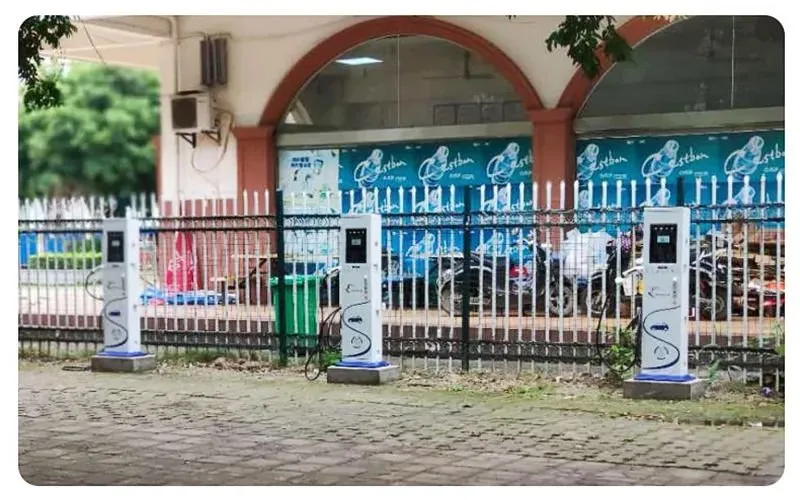
Electric vehicle charging units can be used in various application scenarios, such as:
1. Residential charging: Electric vehicle owners can install Level 2 charging units at home, to charge their vehicles overnight or during off-peak periods.
2. Workplace charging: Employers can provide Level 2 or Level 3 charging units at the workplace, to incentivize employees to use electric vehicles and reduce their commuting costs.
3. Public charging: Charging units can be installed in public locations, such as parking lots, shopping malls, and tourist attractions, to provide convenient charging access for electric vehicle users.
4. Fleet charging: Fleet operators can install charging units at their depots, to charge their electric vehicles between shifts or overnight.


Company Profile

Our Certificates

Packing and Delivery
All the electric vehicle charging units are packed with carton box and poly wooden case to avoid any damages.


Hot Tags: electric vehicle charging units, China electric vehicle charging units manufacturers, factory
Send Inquiry
You Might Also Like


